
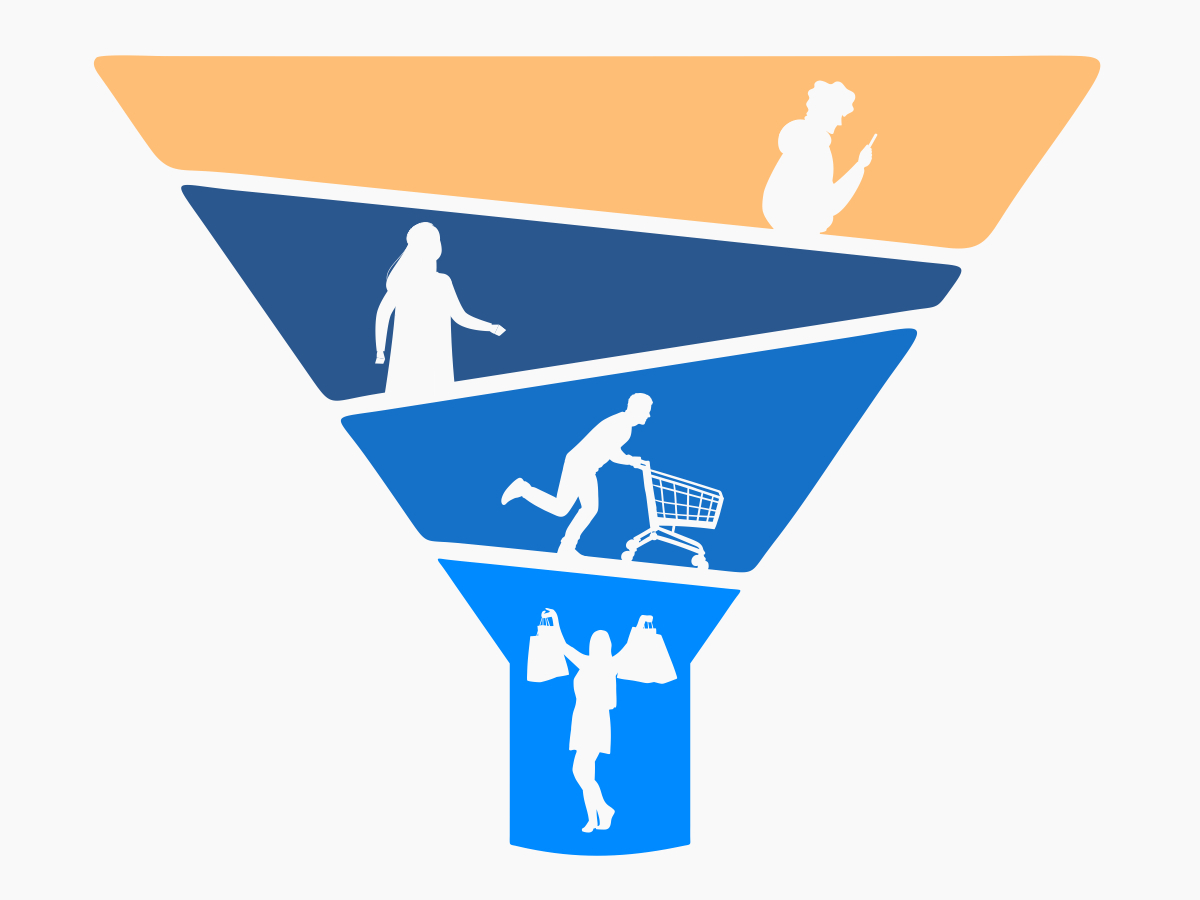
If you’ve spent any time trying to understand marketing, you’ve heard about the importance of building a successful marketing funnel for your organization. The problem? Oftentimes, marketing professionals are quick to sing their praises without actually answering the key question: what is a marketing funnel, anyway?
First things first—there’s no such thing as a universal marketing funnel. For a funnel to work, it has to be strategically crafted for your unique business. It requires an understanding of your ideal customer, as well as a clear vision for the journey you want those customers to take.
At Alluvit Media, we know just how valuable a marketing funnel can be for your business—and we’re here to help you learn how to build one that seamlessly carries your customer from first hello to final conversion.
Table of contents
What Is a Marketing Funnel?
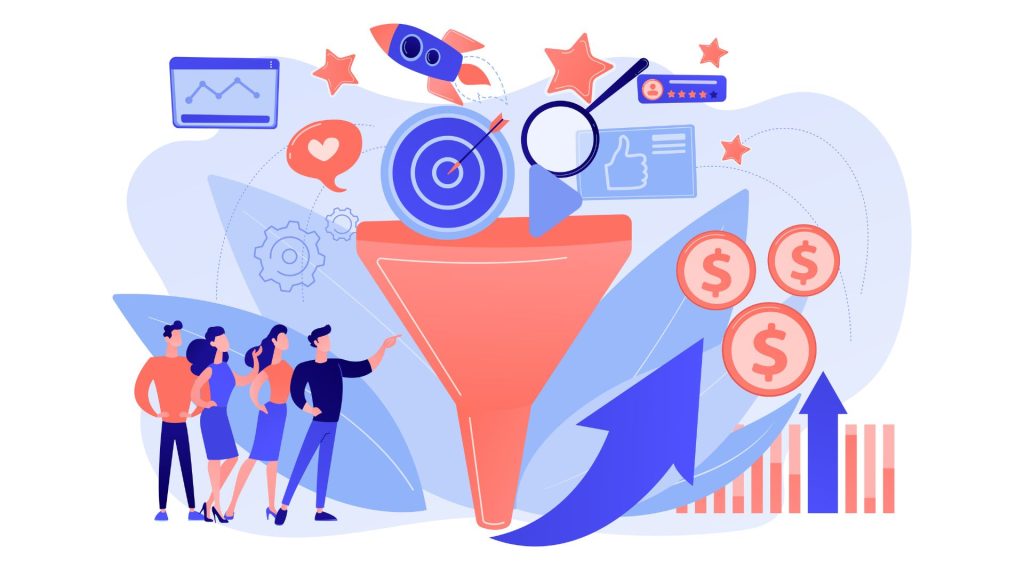
A marketing funnel is a carefully crafted map outlining the stages of your customer’s journey toward their final destination: engagement and conversion. An organization’s marketing efforts are directed by its funnel, which gives teams concrete priorities and goals.
Each funnel is unique—after all, you wouldn’t craft the same strategy for a high-end fashion brand and a non-profit food bank. However, most content marketing funnels are shaped around the same skeleton: the AIDA model.
- Awareness: The customer knows that your brand or product exists: you’ve gotten on their radar.
- Interest: You’ve piqued their curiosity—maybe you do offer something they need.
- Desire: Ideally, as interest builds, desire will, too. Not only is the customer intrigued by you – they see how you could make their life better.
- Action: They made it to the finish line! There’s been a conversion—and now that you’ve inspired your customer to take action, you can give them a reason to stick around.
In modern marketing, the AIDA model is often simplified into a 3-stage model:
- Top of funnel (TOFU): Awareness stage
- Middle of funnel (MOFU): Interest and desire stages
- Bottom of funnel (BOFU): Action stage
Both models act as a foundation. From here, you can build out the perfect funnel for your customer base and company goals.
Planning Your Funnel: Marketing Funnel Stages in Action
You understand marketing funnels conceptually—but how do you build and implement your own for successful conversions?
Here are strategies you can implement for each stage of your content marketing funnel:
Building Awareness
In the early stages of your funnel, you just want your ideal customers to know you exist. You want to be a consistent presence in their day-to-day life so that when they’re ready to take action, you’re their first thought.

- Invest in your social media presence, prioritizing reach.
- Craft educational blog content that’s easily digestible.
- Run a billboard campaign, reaching thousands on their daily commute.
Attracting Interest
Once people know who you are, the next step is to give them a reason to care. What’s special about your offerings or products? How can you improve their lives or solve a problem they face?

- Make it clear—why are you better than your competitors?
- Publish in-depth articles, free resources, or white papers to develop trust. You’re an expert at what you do, and you want people to know it.
- Position yourself as a solution by showing how you can make your customer’s lives better.
Inciting Action
You’ve reached the final stage: conversion. Customers at this stage of your marketing funnel are the most likely to take the plunge, so you want to ensure their experience is both personalized and straightforward. Make it as easy as possible for them to take action, and you’ll be amazed at how often they do.

- Address any final concerns through testimonials, comparisons, and tutorial walk-throughs.
- Offer discounts, coupons, or limited-time deals that create a sense of urgency.
- Create email sequences that follow up if a customer leaves items in their cart or goes silent for a period of time.
From there, keep nurturing your conversions. With intentional investment, they won’t just be a one-time conversion. They’ll be a loyal customer who invites their friends to get in on the magic.
Marketing Funnel Examples in Advertising
An extensive knowledge of marketing funnels is key to building a high-quality advertising strategy. Keeping the crucial stages of the customer journey in mind, advertisers are able to spread awareness, draw interest, and compel action, no matter the audience.
For example, a B2B marketing funnel might have a heightened emphasis on building an organization’s reputation as an industry expert. Advertisers could specifically work on a strategy that positions a company as a high-quality resource and go-to tool while simultaneously nurturing the personal relationships that are so imperative for B2B strategy.
Meanwhile, a B2C marketing strategy might involve broader outreach. Advertisers hoping to reach consumers could prioritize social media, TV commercials, and billboards to make the product they’re selling a household name, strengthening brand awareness with each advertisement.
Launch Your Next Billboard Campaign With Alluvit Media
Ready to add a billboard campaign to your marketing strategy? At Alluvit Media, we offer billboards nationwide. Our experts are here to offer industry recommendations for achieving even better campaign results, and our interactive tools and transparent pricing make the process simple.
Fill out our simple online form for a customized billboard proposal that seamlessly aligns with your brand’s needs.
FAQs
What are the three main stages of a marketing funnel?
In modern marketing, the funnel is often simplified into three stages:
Top of Funnel (TOFU): The awareness stage, where you aim to get on a customer’s radar.
Middle of Funnel (MOFU): The interest and desire stages, where you pique curiosity and show how you can solve a problem.
Bottom of Funnel (BOFU): The action stage, where the customer finally “takes the plunge” and converts.
How does outdoor advertising fit into a marketing funnel?
Outdoor advertising, like billboard campaigns, is a powerful “Top of Funnel” tool. By reaching thousands of people on their daily commute, billboards build massive awareness and ensure your brand is a consistent presence in a customer’s life. This makes you their first thought when they are ready to move further down the funnel toward interest and action.
How can I drive “Action” at the bottom of the funnel?
To incite action and ensure a final conversion, we recommend making the experience personalized and straightforward. Key tactics include offering discounts or limited-time deals to create urgency, sharing testimonials to address final concerns, and using email sequences to follow up with customers who may have gone silent.