

Marketing budgets tend to raise the same question every year: how much should go to proven channels, how much to growth experiments, and how much to long‑shot ideas.
The 70/20/10 marketing budget framework offers a practical way to answer that question without relying on guesswork.
This model is widely referenced in marketing strategy, innovation management, and media planning. It helps teams balance stability, optimization, and experimentation while keeping spending aligned with business goals.
Table of contents
- The 70/20/10 Marketing Budget Explained
- 70%: Core Marketing Activities
- 20%: Growth And Optimization Initiatives
- 10%: Experimental Marketing
- Why The 70/20/10 Framework Works For Marketing Teams
- How to apply the 70/20/10 rule in real marketing budgets
- 70/20/10 and Outdoor Advertising
- Common mistakes when using the 70/20/10 model
- Is the 70/20/10 rule right for every business?
The 70/20/10 Marketing Budget Explained
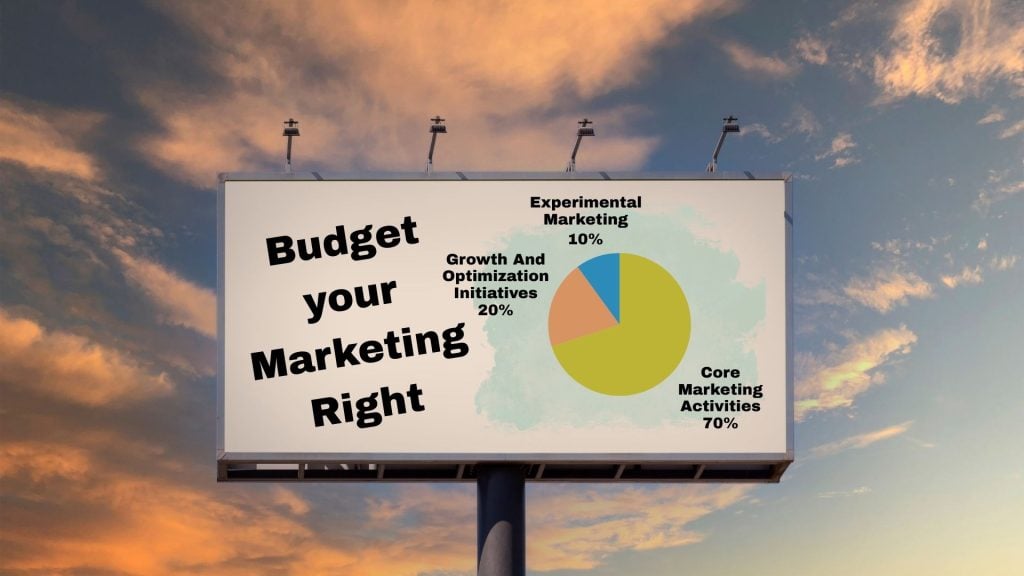
The 70/20/10 rule divides a marketing budget into three categories based on risk and return expectations:

- 70% core marketing – established channels and tactics with consistent performance
- 20% growth marketing – emerging strategies and optimizations with upside potential
- 10% experimental marketing – new, unproven ideas designed to uncover future opportunities
Rather than focusing on channel type alone, the framework prioritizes confidence level and predictability. Each percentage reflects how reliably a tactic has contributed to revenue, awareness, or lead generation in the past.
70%: Core Marketing Activities
The largest share of the budget supports marketing efforts with a clear performance history. These activities usually generate steady results and provide the foundation for pipeline and brand visibility.
Examples often include:
- Search engine optimization and content marketing with established rankings
- Paid search or paid social campaigns with stable cost-per-acquisition trends
- Ongoing outdoor advertising in proven markets
- Email marketing to engaged subscriber lists
Industry research reinforces the value of consistency in core channels. According to data from Statista, digital advertising spending continues to grow year over year. Marketers and advertisers have seen it work—if not for themselves, then for others—and they’re willing to invest more in driving potential success.
From a planning perspective, this portion of the budget focuses on maintaining momentum rather than testing assumptions.
20%: Growth And Optimization Initiatives
The next segment supports tactics that show promise yet still require refinement or scale testing. These initiatives often build on existing channels through new formats, audiences, or placements.
Common examples include:
- Expanding paid media into new geographic markets
- Testing new ad formats such as connected TV or digital out‑of‑home
- Improving conversion rates through landing page optimization
- Developing new content clusters around emerging search trends
Growth-focused investment aligns closely with how modern marketing teams adapt to shifting consumer behavior. Google’s research on marketing experimentation highlights that incremental testing plays a meaningful role in long-term performance gains.
This budget segment typically carries moderate risk while offering measurable upside.
10%: Experimental Marketing
The final portion is reserved for ideas without historical performance data. These initiatives often explore new platforms, creative approaches, or technologies.
Examples include:
- Piloting new social platforms or ad networks
- Testing immersive formats such as augmented reality or experiential activations
- Launching brand campaigns in nontraditional environments
- Experimenting with emerging data and measurement tools
While outcomes remain uncertain, the learning value holds significant importance. Harvard Business Review research on innovation investment emphasizes that small, controlled experiments help organizations identify future growth drivers without placing core revenue at risk.
Why The 70/20/10 Framework Works For Marketing Teams
This budgeting approach supports three essential objectives at once:

- Financial stability through reliable channels
- Scalable growth through structured optimization
- Future readiness through disciplined experimentation
It also encourages teams to document results, measure outcomes, and reassess allocations over time. As performance data accumulates, initiatives can move between categories based on demonstrated effectiveness.
How to apply the 70/20/10 rule in real marketing budgets
Implementation starts with a clear review of past performance data. Marketing leaders typically analyze:
- Cost per lead or acquisition
- Contribution to revenue or pipeline
- Brand lift and awareness metrics
- Channel saturation and diminishing returns
From there, budgets can be allocated according to confidence levels rather than trend-driven assumptions. Many organizations revisit these percentages quarterly to reflect changes in performance or market conditions.
For teams managing integrated campaigns, pairing this framework with omnichannel planning often leads to stronger alignment. Just be sure you’re looking at marketing KPIs that actually serve your business, otherwise you’re chasing after metrics that don’t really impact your bottom line.
70/20/10 and Outdoor Advertising
The framework adapts well to both digital and traditional media, which makes it especially useful for brands running omnichannel campaigns. Instead of separating channels by format, the model evaluates how predictable each placement or tactic has been within your broader media mix.
70% core category
Outdoor advertising is a strong example of how this plays out in practice. For many brands, established out-of-home placements with consistent impression delivery and historical performance naturally fall into the 70% core category. This often includes:
- Long-running billboard locations in high-traffic corridors
- Transit advertising with stable commuter reach
- Street furniture placements in dense urban markets
These placements tend to deliver reliable awareness and frequency, particularly when they are part of a recurring buy. When performance data supports their contribution to brand lift or downstream conversions, they function much like evergreen digital channels.
20% growth category
The 20% growth portion of the budget often supports outdoor expansion and optimization. This can include testing new geographic markets, layering outdoor campaigns with mobile retargeting, or introducing formats such as digital billboards or programmatic DOOH. These initiatives build on proven principles while exploring additional scale or efficiency.
10% experimental category
The 10% experimental segment creates space for innovation within outdoor advertising. Brands may use this allocation to pilot unconventional placements, limited-run experiential activations, or emerging technologies such as dynamic creative triggered by time, weather, or location data. While performance benchmarks may not yet exist, these tests generate insight that informs future planning.
Common mistakes when using the 70/20/10 model
Several challenges appear when teams adopt the framework without structure:

- Treating the percentages as fixed rules rather than planning guidelines
- Skipping measurement for experimental campaigns
- Over‑allocating funds to trends without performance benchmarks
Successful use depends on documentation, clear KPIs, and regular performance reviews.
Is the 70/20/10 rule right for every business?
The framework works especially well for companies with diversified marketing programs and measurable outcomes. Early‑stage startups may adjust the ratios based on available data, while mature brands often refine the model to fit regional or channel‑specific needs.
It may come down to trial and error—as much of marketing and advertising does! Don’t get discouraged. Learn from missteps and adjust accordingly.
What remains consistent no matter the size or type of your business is the underlying principle: balanced investment across reliability, growth, and discovery.
FAQs: 70/20/10 rule
How often should we adjust our marketing budget using 70/20/10?
Many marketing teams review their budget allocations quarterly or semiannually. As key performance data accumulates, tactics can shift between categories, allowing budgets to reflect current results rather than past assumptions.
Does the 70/20/10 rule apply to traditional advertising like billboards?
Definitely. Outdoor advertising—which is proven to have a meaningful ROI with increased brand awareness, foot traffic, and conversions—tends to fit into the core category. New locations, formats, or even technologies can fall into the growth or experimental categories.