

When you’re designing a B2B advertising strategy, you’re not just targeting a generic audience. You’re trying to build trust and brand awareness with leaders, decision-makers, and people with the power to create progress.
B2B strategies require intentionality and a deep understanding of the value of your product or service—and an advertising plan that knows how to make that value clear.
Keep reading to learn everything you need to know to craft your next B2B advertising strategy.
Table of contents
What Is B2B Advertising?
B2B advertising, or business-to-business advertising, is commercial advertising in which a business or company is marketing themselves to another business or company instead of a single consumer.
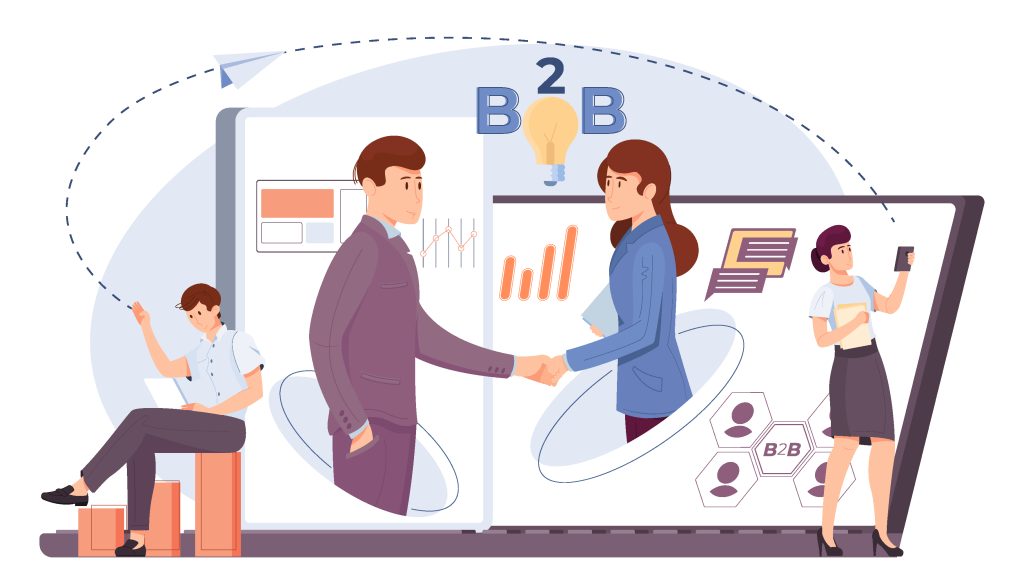
One of the biggest things that sets B2B advertising apart from B2B (business-to-consumer) advertising is that it isn’t designed to elicit an emotional impulse-purchase or to inspire quick action. Instead, it’s a long game that requires businesses to foster trust among rational decision-makers.
How to Build Awareness With B2B Advertising Campaigns
B2B campaigns are rooted in trust. You aren’t asking companies to buy a $5 cup of coffee; you’re asking them to invest significant money and resources into your company’s services or product. This type of investment only takes place when you’ve established a steady foundation of brand awareness and trust.
Instead of trying to sell to an individual, you’re selling to a team. Depending on what you sell, the final purchasing call could come from any combination of teams within an organization: for example, new software might be run by marketing, sales, and information technology teams. Decisions aren’t made in isolation, and your advertising efforts need to take that into consideration.
As consumer behavior continues to evolve, it’s more important than ever to make a clear impact in your industry. Here’s how you can stay competitive in a constantly shifting space.
1. Know Your Niche
Businesses are looking for the product or service that most closely fits their exact need. Individual consumers may be willing to make a loose fit work; companies and teams don’t have the time. If a winery needs new sales software and is choosing between a generic option and a software designed specifically for the wine industry, the choice is obvious. So who is your product for?
Advertise to an area of the industry that you know inside and out. When you make it clear that you’re experts in your industry, that specialist flair makes you indispensable. Your brand can make an impact—now it’s time to make sure that your ideal customer knows it.
2. Build a Local Presence
If your brand has any level of localization, make good use of it. When you firmly root yourself in a local community, you build a base of dedicated customers. From there, you can grow and expand rapidly. By beginning your heaviest advertising campaigns in cities and areas close to home, you’re able to deepen the authenticity and trust of your brand.
3. Invest in Billboard Campaigns
Did you know that out-of-home (OOH) advertising has the highest return on investment (ROI) when compared to other forms of advertising? That’s because OOH perfectly blends great visibility with high engagement. These ads are viewed more favorably than digital advertising, which can feel overwhelming and even spammy in a landscape growing more oversaturated by the day. OOH advertisements also have a longer-lasting impact, with greater rates of viewer retention than their digital counterparts.
By running a billboard campaign, you give your brand a voice in the real world, boosting brand trust and awareness in a bigger way than you’re able to do online.
4. Explore Place-Based Advertising
One of the most seamless ways you’re able to integrate into your audience’s sphere of awareness is through place-based advertising. This form of OOH media is tied to a specific location, presenting an engaging form of advertising that goes beyond a computer screen or billboard. Instead of putting your brand in front of the general public, you’re able to reach a more intentional subset of people through careful targeting. This matters when you’re trying to become the first thought of leaders in your industry.
5. Prioritize Analytics & Reporting
Even the best advertising campaigns fall flat when they aren’t backed by solid analytics and reporting. After all, if you don’t know how your ad is performing, how are you able to tweak and adjust for higher performance? It’s a common misconception that OOH advertising doesn’t yield analytic information, but when you know how to calculate reach and frequency, you’ll discover a wealth of data that helps move your company forward.
6. Utilize Referral Marketing

Referral marketing is particularly powerful in the B2B world, where word-of-mouth is worth its weight in gold. If you have steady customers who appreciate your product or service, their recommendation will extend your company’s reach and trust within the industry. Consider hosting an event for in-person networking, offer incentives or rewards to customers for sharing your service or product, or design an affiliate system.
7. Pair OOH Advertising With Digital Campaigns
Develop B2B Advertising Strategies That Set Your Brand Apart With Alluvit Media
Digital advertising isn’t enough on its own, but can be a valuable tool when paired with your OOH campaign. Unify your messaging across platforms, pair digital billboards with real-time social content, or tease an upcoming OOH campaign on socials.

At Alluvit Media, we know the impact that OOH advertising can make on a B2B marketing strategy. There’s no better way to build trust, establish your brand’s authority, and drive real world action. We’ve helped nationwide B2B brands launch outdoor media campaigns that move the needle for their business.
Ready to see the results for yourself? Request your free proposal today.
FAQs
What should my company avoid when crafting a billboard campaign?
Avoid using too much copy, choosing the wrong billboard location, abandoning your branding, or advertising before fully understanding your audience.
Do B2B businesses need a GTM strategy?
A go-to-market (GTM) strategy is crucial for businesses needing to better understand their target customers and gain a competitive advantage within their market. It’s an important tool when preparing for a launch of any kind.