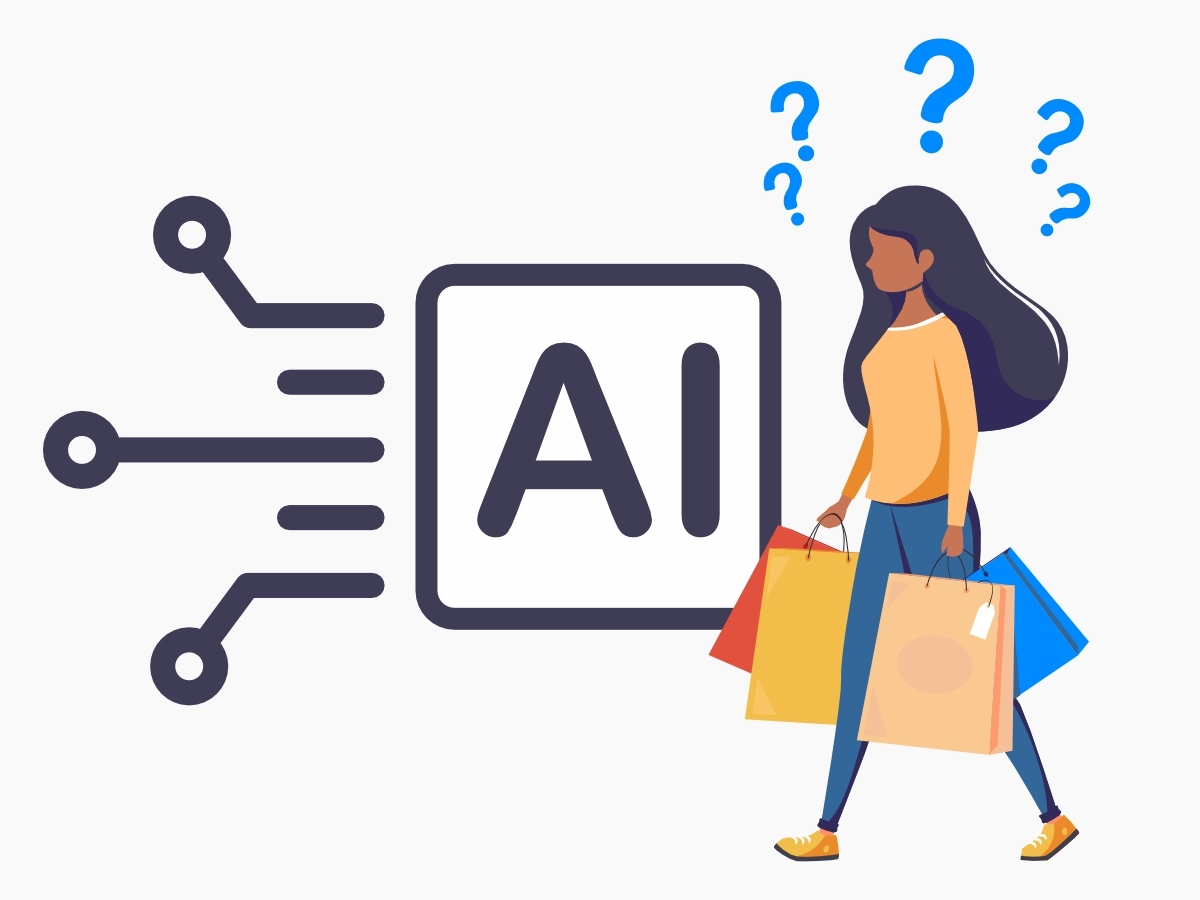
Everywhere you turn, AI is finding new ways to integrate into daily life. For some brands and organizations, it’s a welcome efficiency boost. However, many consumers are finding it difficult to know who to trust in the new AI era.
As the general public grows more and more attuned to AI-generated content, an overall sense of skepticism is prevalent in consumer behavior. No longer are customers just wondering about whether your brand offers a valuable product or service. Instead, they’re wondering if your content itself is real at all—or simply whipped up via artificial intelligence.
Keep reading to learn how to maintain trust with your customers in a constantly advancing world.
The Rise of AI in Marketing
In recent years, AI use has become more and more common in marketing. Brands are using ChatGPT, Claude, and other AI tools to write social media and advertising copy, create graphics and video content, and even come up with overall marketing strategies and campaigns.
GenAI is expected to reach 40% of all ads this year, with small and mid-tier brands adopting the most quickly—presumably to save money. As AI tools and capabilities continue to grow, those numbers are only expected to rise.
What Is AI Slop?
The term “AI Slop” has become such a huge part of the cultural zeitgeist over the past few years that Merriam-Webster chose “slop” as their 2025 Word of the Year. Defined as “digital content of low quality that is produced usually in quantity by means of artificial intelligence,” slop is the easiest way to describe the weird, cheesy, and downright junky videos and images that AI has brought into social media feeds across the world.

This content provides little to no value, and is typically riddled with errors, inconsistencies, and falsehoods.
Consumer Trust and AI: How AI Is Destroying Brand Trust
AI may be growing rapidly, but so is consumer skepticism.
As AI has become a larger and larger part of the digital space, consumers find themselves having to ask an additional question with each piece of content that crosses their screen: Is this real, or AI-generated?
No longer can the average internet user see a video of two puppies playing or their favorite celebrity on a day off and trust that what they’re seeing is real, authentic video. Instead, they find themselves taking a second glance, scrutinizing the content on their screen to see if it looks genuine or if things feel a little…off.
That same skepticism is now extending to ads. The average person sees roughly 5,000 ads per day. But now, instead of simply evaluating the ad against their own needs and lifestyle preferences, the consumer is first wondering if the ad is real or AI.
There’s a new barrier being built between consumers and brand trust—and with every false ad and piece of AI slop advertising, that barrier grows wider.

Real brands are seeing the backlash. During the 2025 holiday season, McDonalds pulled an ad after receiving criticism that the “AI slop” was “incredibly odd.” Coca-Cola faced similar negative feedback after their own holiday ad was noted to have “glitchy inconsistencies.” While both brands are beloved enough to recover, the ads left a sour taste in viewers' mouths—and smaller brands won’t recover so easily.
How Can Advertisers Build Brand Trust With Their Audience?
As cynicism and mistrust in both the digital world and advertising as a whole continue to climb, advertisers have a huge opportunity to use the current feelings of consumer uncertainty as a catalyst to deepen their own brand trust.
The biggest way to do so? Putting the humanity and real-world impact back in advertising.
Your audience is operating from a place of doubt. Right now, they’re stepping into their first contact with your brand with lower trust than they would have five years ago. The brands that will resonate the most deeply with these consumers are the ones who make it clear that humans—not robots—set the tone for your company’s products, services, and decisions.

Here’s how to do it.
1. Lead With Authenticity
Brand loyalty begins with brand trust—and that trust is built on a foundation of genuine authenticity. If you want consumers to stand by you, you have to give them something to stand by.
Keep the mission and heart behind what you do at the forefront, making it clear that your brand believes in its work.
2. Take Your Advertising Offline
Digital burnout is at an all-time high. It’s changing how consumers process information, engage with content, and make purchasing decision. As attention spans shrink and ad fatigue grows, if you want to keep your ad from getting lost in the blur of autoplay videos, stepping outside the scroll is your key to staying relevant.
Online, consumers are on guard. They’re scanning each piece of content, looking for six fingers instead of five on a model’s hand and skimming headline copy for AI tells.
But out in the real world, customers can relax a little more. They’re less inundated and more open. And if your brand is making an effort to reach them in an intentional, localized way, you might end up with a lifelong customer.
From billboard advertising to truck advertising, airport campaigns and movie theater ads, when you meet people in the real world, your ad is far more likely to connect and convert.
3. Prioritize Human-First Advertising
In the AI age, the more human your advertising is, the better. Use real people who don’t look airbrushed. Worry less about perfection, and more about connection. Find ways to make your ads interactive. Make your messaging clear and straightforward.
Keep your consumers from ever having to wonder if there’s a person behind it all.
Make Your Marketing Human Again Through Real-World Impact
Looking to find a way to stand out in the current marketing landscape? When your brand chooses to make a real world impact through out-of-home (OOH) advertising, you’re not just getting your message across—you’re making it one that consumers remember and feel safe to believe in.
Ready to start creating your next billboard campaign? Request a free proposal to get started today.
FAQs
How do I choose the best outdoor marketing agency to support my OOH efforts?
Choose an outdoor marketing agency with built-in support services, a wide range of inventory, and experience in highly regulated markets to ensure they keep you legally compliant throughout each step of the process.
I’m trying to create a human-first ad. Should I use stock photos?
You can! Just make sure that the stock photos you use are commercially licensed, and are actually photos of real people instead of AI-generated images.
How do I know who to target in my OOH advertising?
Before you begin planning your campaign, do market research to determine the market you’re trying to reach and the specific customers within it. From there, you’ll be able to understand your audience’s needs and compare your marketing efforts against your competitors.
Ready to bring your brand outdoors?
Connect with an outdoor media expert or call (866) 499-3334.

Nancy Rohr
Senior Account Executive · Alluvit Media
Nancy Rohr is an innovative advertising and marketing professional with extensive experience in OOH and digital marketing. She possesses thorough knowledge of national and local promotional tactics, properties, and operations. A goal-oriented visionary with a track record of increasing sales, she supports local and national advertisers in boosting their brand recognition and value. At Alluvit Media, Nancy holds the largest value contract and highest initial invoicing for 2022 and 2023.